I am very interested in knowing more about the history of surnames and their possible change post war. I have been told that my fathers name (Sodomaco) may have actually been something like Sedmac or Sedmak and my mothers name (Mauri) may have been Mauric or Maurich. Not having easy access to records in Australia, I would be keen for some guidance on how to validate or otherwise such facts.
Steve Sodomaco
S. Layden / 6-9-2018 / ·
that is so totally rubbish, that our surnames were italicized its the other way around, our Italian names were changed to suit the Slavs, why do people tell so many fabricated lies i will never know, i know what my parents were put through during and after the war, i will never be a Croatian or a Slovenian, even though my papers say otherwise in my heart and soul i know what i am and you cant erase that my mother tongue is Italian and always will be till the day i die,
Ivan Tottene / 6-26-2018 / ·
Hi, Iam also very interested about this subject. There is no information about italian heritage or stemma about my family. I believe that my Family (Tottene) have bem origined from Instria or Croatian states.
noa radic / 6-2-2020 / ·
I want to know italian surname for radic
Cliff Lauri / 1-30-2021 / ·
My surname is Lauri. I’ve had my DNA tested and it shows North Eastern Italian and Croatian/Slovenian links going back a few hundred years. My great grandfather was actually born in Messina Sicily and moved to Malta where the Lauri surname is quite common, but I’m wondering if his ancestors came down to Sicily from the North Eastern Italy and/or Croatia/Slovenia regions. Does anyone have any info on my surname? (I’m from England)
George / 7-11-2021 / ·
My grandfather’s last name was changed in 1929 and rather than Italianize a Slavic sounding name, he adopted my grandmother’s name which was clearly Italian. This of course reflected the rise of Italian nationalism and related policies. Interestingly, he changed it back in 1956, but chose to keep the Italianized spelling rather than the Slavic one (I.e. ending of “vich” vs “vic” and no “j” put back into the name). This reflected a time when Yugoslavia was more certainly getting possession of Istria and the Italian schools, churches and so on already changed to ensure no Italian spoken. My parents had to learn Croatian and were fortunate to live in an Italian speaking town that was heavily anti-fascist.
It was fascinating for me to find my grandfather’s application reply letter sent to Yugoslavia for him to be considered an Italian citizen (for repatriation to Italy I assume), but the reply stated that his mother tongue wasn’t Italian (though it was). That was just before the name change in 1956.
Love my homeland Croatia and proud of my 500 years of Istrian heritage.
Jen. S. / 7-15-2021 / ·
I’d like to know what surname that is italian means then? I did my dna…im Croatian. Nit Italian like I’ve thought my whole life. None. Only Croatian, German, portugese….but no Italian. How did my grandfather and great grandparents whom I thought were 100% Italian get their name tgen?
This website uses cookies to improve your experience. We'll assume you're ok with this, but you can opt-out if you wish.Accept
Privacy & Cookies Policy
Privacy Overview
This website uses cookies to improve your experience while you navigate through the website. Out of these, the cookies that are categorized as necessary are stored on your browser as they are essential for the working of basic functionalities of the website. We also use third-party cookies that help us analyze and understand how you use this website. These cookies will be stored in your browser only with your consent. You also have the option to opt-out of these cookies. But opting out of some of these cookies may affect your browsing experience.
Necessary cookies are absolutely essential for the website to function properly. This category only includes cookies that ensures basic functionalities and security features of the website. These cookies do not store any personal information.
Any cookies that may not be particularly necessary for the website to function and is used specifically to collect user personal data via analytics, ads, other embedded contents are termed as non-necessary cookies. It is mandatory to procure user consent prior to running these cookies on your website.
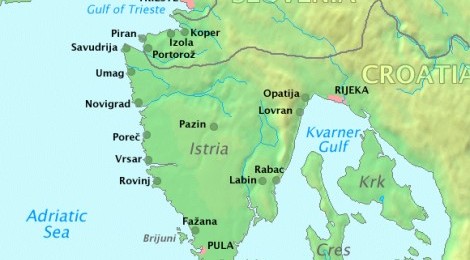


I am very interested in knowing more about the history of surnames and their possible change post war. I have been told that my fathers name (Sodomaco) may have actually been something like Sedmac or Sedmak and my mothers name (Mauri) may have been Mauric or Maurich. Not having easy access to records in Australia, I would be keen for some guidance on how to validate or otherwise such facts.
Steve Sodomaco
that is so totally rubbish, that our surnames were italicized its the other way around, our Italian names were changed to suit the Slavs, why do people tell so many fabricated lies i will never know, i know what my parents were put through during and after the war, i will never be a Croatian or a Slovenian, even though my papers say otherwise in my heart and soul i know what i am and you cant erase that my mother tongue is Italian and always will be till the day i die,
Hi, Iam also very interested about this subject. There is no information about italian heritage or stemma about my family. I believe that my Family (Tottene) have bem origined from Instria or Croatian states.
I want to know italian surname for radic
My surname is Lauri. I’ve had my DNA tested and it shows North Eastern Italian and Croatian/Slovenian links going back a few hundred years. My great grandfather was actually born in Messina Sicily and moved to Malta where the Lauri surname is quite common, but I’m wondering if his ancestors came down to Sicily from the North Eastern Italy and/or Croatia/Slovenia regions. Does anyone have any info on my surname? (I’m from England)
My grandfather’s last name was changed in 1929 and rather than Italianize a Slavic sounding name, he adopted my grandmother’s name which was clearly Italian. This of course reflected the rise of Italian nationalism and related policies. Interestingly, he changed it back in 1956, but chose to keep the Italianized spelling rather than the Slavic one (I.e. ending of “vich” vs “vic” and no “j” put back into the name). This reflected a time when Yugoslavia was more certainly getting possession of Istria and the Italian schools, churches and so on already changed to ensure no Italian spoken. My parents had to learn Croatian and were fortunate to live in an Italian speaking town that was heavily anti-fascist.
It was fascinating for me to find my grandfather’s application reply letter sent to Yugoslavia for him to be considered an Italian citizen (for repatriation to Italy I assume), but the reply stated that his mother tongue wasn’t Italian (though it was). That was just before the name change in 1956.
Love my homeland Croatia and proud of my 500 years of Istrian heritage.
I’d like to know what surname that is italian means then? I did my dna…im Croatian. Nit Italian like I’ve thought my whole life. None. Only Croatian, German, portugese….but no Italian. How did my grandfather and great grandparents whom I thought were 100% Italian get their name tgen?